brain flakes instructions free

Brain Flakes: A Comprehensive Guide (Updated January 26‚ 2026)

Dr․ Drew Ramsey‚ a psychiatrist focused on food’s impact on the brain‚ frequently receives inquiries about dietary choices for mood and cognitive enhancement․

He possesses an extensive repertoire of preferred foods‚ demonstrating the powerful link between nutrition and mental wellbeing‚ offering a holistic approach․

What are Brain Flakes?

Brain Flakes represent a fascinating intersection of snack food and construction toy‚ offering a unique play experience centered around edible building components․ These aren’t simply pre-made shapes; they are small‚ often wheat-based‚ pieces designed to be connected‚ allowing for the creation of three-dimensional structures․

As highlighted by Dr․ Drew Ramsey‚ MD‚ a psychiatrist specializing in nutritional psychiatry‚ understanding the connection between food and brain health is crucial․ Brain Flakes tap into this concept by providing a playful way to engage with food‚ potentially sparking creativity and cognitive function․

The appeal lies in their simplicity and edibility – once the building is complete (or even during construction!)‚ the structures can be enjoyed as a snack․ This dual nature distinguishes them from traditional building toys like LEGOs or magnetic tiles‚ offering a novel and potentially healthier alternative․

They are a fun way to explore spatial reasoning․

The Origins of Brain Flakes

The precise origins of Brain Flakes are somewhat shrouded in anecdotal history‚ emerging as a nostalgic treat for many who grew up in the mid-20th century․ While not born from extensive marketing campaigns or corporate innovation‚ they gained popularity through word-of-mouth and local distribution‚ particularly in certain regions․

Interestingly‚ the concept aligns with the growing interest‚ as championed by experts like Dr․ Drew Ramsey‚ MD‚ in utilizing food as more than just sustenance․ Ramsey’s work emphasizes the brain-boosting potential of specific foods‚ and Brain Flakes‚ though simple‚ represent a playful engagement with edible materials․

Early iterations were often homemade‚ with families creating their own versions using basic ingredients like flour and water․ This DIY aspect contributed to their charm and accessibility‚ fostering a sense of creativity and resourcefulness․ The commercial production followed‚ aiming to capture this nostalgic appeal․

They became a beloved childhood memory for many․

The Core Concept: Building with Edible Structures

The fundamental appeal of Brain Flakes lies in their unique ability to transform a simple snack into a constructive‚ creative activity․ Unlike traditional building toys‚ Brain Flakes offer the novelty of an edible medium‚ blurring the lines between play and consumption․

This concept resonates with the principles advocated by Dr․ Drew Ramsey‚ MD‚ who highlights the importance of mindful eating and engaging with food in a positive way․ Building with Brain Flakes encourages a tactile experience‚ fostering a connection to the ingredients and the process of creation․

The inherent fragility of the structures adds a layer of challenge and encourages problem-solving skills․ Children (and adults!) learn to balance stability with design‚ understanding basic engineering principles through playful experimentation․ It’s a hands-on lesson in structural integrity‚ all while enjoying a tasty treat․

The edible nature makes dismantling a reward!

Ingredients & Nutritional Value

While the joy of Brain Flakes centers on building‚ understanding their composition is crucial‚ especially considering Dr․ Drew Ramsey’s emphasis on food’s impact on brain health․ The core ingredients directly influence the nutritional profile and potential benefits․

Though specific formulations vary‚ Brain Flakes primarily consist of wheat flour‚ sugar‚ and often include added vitamins and minerals․ The type of sugar used – whether refined or natural – significantly impacts the overall healthfulness․ A focus on whole wheat flour would enhance fiber content‚ contributing to sustained energy levels․
Considering Ramsey’s work‚ prioritizing Brain Flakes with minimal processed sugars and fortified with essential nutrients aligns with a brain-healthy diet․ Awareness of potential allergens is also paramount‚ ensuring safe enjoyment for all users․ Detailed ingredient lists are vital for informed choices․

Nutritional transparency is key for mindful snacking․

The Primary Ingredient: Wheat Flour

Wheat flour forms the foundational structure of Brain Flakes‚ directly impacting their texture‚ binding properties‚ and nutritional value – a point Dr․ Drew Ramsey would appreciate when discussing food’s role in brain function․ The type of wheat flour utilized is a critical determinant of quality․

Refined wheat flour‚ commonly used‚ provides a lighter texture but lacks the fiber and nutrients found in whole wheat varieties․ Opting for whole wheat flour increases the fiber content‚ promoting sustained energy and digestive health․ This aligns with Ramsey’s advocacy for nutrient-dense foods․

The gluten content in wheat flour is essential for the flakes to adhere‚ enabling construction․ However‚ this also makes Brain Flakes unsuitable for individuals with gluten sensitivities or celiac disease․ Understanding the flour source is vital for dietary considerations․

Flour quality dictates the building experience and nutritional impact․

Sugar Content and Types Used

Sugar plays a dual role in Brain Flakes: contributing to flavor and aiding in the binding process‚ a factor Dr․ Drew Ramsey might analyze within a broader dietary context․ The amount and type of sugar significantly influence the overall health profile of the snack․

Typically‚ Brain Flakes utilize granulated sugar‚ providing sweetness and assisting in creating a cohesive texture․ However‚ manufacturers may also incorporate corn syrup or dextrose for enhanced binding and a smoother consistency․ These additions increase the sugar content․

Concerns regarding excessive sugar intake are valid‚ as high sugar consumption can negatively impact mood and cognitive function – areas of Ramsey’s expertise․ Lower-sugar alternatives or mindful portion control are recommended for health-conscious consumers․

Balancing sweetness with nutritional value is key to a positive Brain Flakes experience․

Vitamin & Mineral Composition

Considering Dr․ Drew Ramsey’s focus on food’s impact on brain health‚ the vitamin and mineral profile of Brain Flakes is a crucial aspect to examine․ While primarily a carbohydrate source‚ Brain Flakes can offer modest contributions to daily nutrient intake․

Due to the wheat flour base‚ they contain some B vitamins‚ particularly thiamin‚ niacin‚ and folate‚ essential for nerve function and energy metabolism․ Trace amounts of iron are also present‚ vital for oxygen transport․ However‚ fortification is often employed to enhance nutritional value․

Manufacturers may add vitamins like Vitamin D and calcium‚ boosting the snack’s health benefits․ It’s important to note that Brain Flakes shouldn’t be relied upon as a primary source of vitamins and minerals‚ but rather as a supplemental component of a balanced diet‚ aligning with Ramsey’s holistic approach․

Analyzing the label for specific fortification details is recommended․

Potential Allergens in Brain Flakes

Given Dr․ Drew Ramsey’s emphasis on mindful eating and individual needs‚ understanding potential allergens in Brain Flakes is paramount for safe consumption․ The primary ingredient‚ wheat flour‚ immediately flags this product as a concern for individuals with gluten intolerance or wheat allergies․

Symptoms can range from mild digestive upset to severe allergic reactions․ Furthermore‚ depending on the manufacturing process‚ cross-contamination with other allergens like soy‚ nuts‚ or dairy is possible․ Always scrutinize the product packaging for clear allergen warnings․

Manufacturers are legally obligated to list common allergens․ Parents and caregivers must be particularly vigilant when introducing Brain Flakes to children‚ carefully monitoring for any adverse reactions‚ mirroring Ramsey’s preventative approach to brain health through diet․

Consulting with a healthcare professional is advised for individuals with known allergies․

Brain Flakes Instructions: The Classic Method

Drawing inspiration from Dr․ Drew Ramsey’s focus on accessible brain-boosting strategies‚ the classic Brain Flakes method prioritizes simplicity and engagement․ Begin with a clean‚ flat surface – a table or countertop works well․ Gently separate the flakes; they are designed to easily detach․

The core technique involves lightly moistening one side of a flake with water․ This creates a temporary adhesive․ Press two moistened sides together to form a connection․ Repeat this process‚ building outwards from a central point․

Experiment with different angles and configurations․ Remember‚ patience is key! Structures may require gentle support while the flakes adhere․ This hands-on process‚ akin to Ramsey’s food-based therapies‚ fosters creativity and focus․

Allow structures to dry completely for increased stability․

Step-by-Step Assembly Guide

Following Dr․ Ramsey’s principle of accessible brain health‚ this guide breaks down Brain Flakes assembly into manageable steps․ Step 1: Prepare your workspace and separate the flakes․ Step 2: Dip a fingertip into water and lightly moisten one side of a flake – avoid saturation․

Step 3: Press the moistened side firmly against another flake‚ holding for 5-10 seconds to establish a bond․ Step 4: Continue adding flakes‚ building your desired shape․ Start with a simple base for stability․

Step 5: For taller structures‚ create triangular supports․ Step 6: Allow the creation to dry undisturbed for optimal strength․ Remember‚ experimentation is encouraged! Like Ramsey’s dietary recommendations‚ there’s no single “right” way․

Embrace the process and enjoy the tactile experience․

Troubleshooting Common Building Issues

Drawing from Dr․ Ramsey’s problem-solving approach to brain health‚ addressing building challenges with Brain Flakes requires patience․ Issue 1: Flakes aren’t sticking? Ensure sufficient moisture – too little‚ and they won’t bond; too much‚ and they’ll become soggy․

Issue 2: Structure collapsing? Reinforce the base with a wider foundation and utilize triangular supports for added stability․ Issue 3: Flakes breaking? Handle gently; excessive pressure can cause fractures;

Issue 4: Uneven drying? Rotate the structure to ensure all sides are exposed to air․ Remember‚ like optimizing diet for cognitive function‚ building strong structures takes practice and adjustment․ Don’t be afraid to rebuild and refine your technique!

Experimentation is key to mastering the art of Brain Flakes construction․

Tips for Stronger Structures

Inspired by Dr․ Ramsey’s emphasis on building a robust brain through nutrition‚ constructing resilient Brain Flake structures demands strategic planning․ Begin with a solid‚ broad base – think of it as the foundation of a healthy diet․

Employ triangular shapes; they offer exceptional structural integrity‚ mirroring the interconnectedness of brain networks․ Utilize a minimal amount of water to activate the flakes‚ avoiding saturation․ Allow ample drying time between layers‚ preventing collapse․

Interlock flakes thoroughly‚ ensuring complete adhesion․ Consider internal supports for taller creations‚ much like supporting cognitive function with diverse nutrients․ Remember‚ consistent practice and mindful construction yield the most impressive results!

Patience and precision are vital for architectural success․

Brain Flakes and Cognitive Development

Drawing from Dr․ Ramsey’s work on food’s influence on brain health‚ Brain Flakes offer a unique avenue for stimulating cognitive growth․ The act of building isn’t merely playful; it’s a workout for the mind‚ fostering crucial developmental skills․

Constructing with Brain Flakes actively engages spatial reasoning‚ requiring children to visualize and manipulate shapes in three dimensions․ This process mirrors the brain’s own organizational efforts‚ strengthening neural pathways․ Problem-solving skills are honed as builders overcome structural challenges․

The tactile experience further enhances learning‚ solidifying concepts through hands-on engagement․ Brain Flakes provide a delicious and engaging way to nurture a growing mind‚ aligning with Dr․ Ramsey’s holistic approach․

It’s a tasty path to enhanced cognitive abilities!

The Role of Fine Motor Skills

Considering Dr․ Ramsey’s emphasis on holistic brain health‚ the physical act of manipulating Brain Flakes is profoundly beneficial․ Each small piece demands precise hand movements‚ directly contributing to the development of fine motor skills․

Picking up‚ connecting‚ and positioning the flakes strengthens the small muscles in hands and fingers‚ crucial for tasks like writing‚ drawing‚ and using tools․ This dexterity isn’t isolated; it’s interconnected with cognitive functions‚ enhancing hand-eye coordination and overall control․

The repetitive nature of building also fosters patience and concentration‚ valuable skills applicable far beyond playtime․ Brain Flakes offer a fun‚ edible way to refine these essential motor skills‚ supporting a child’s physical and cognitive development․

It’s a delicious exercise for little hands and growing minds!

Spatial Reasoning and Brain Flakes

Building with Brain Flakes‚ as highlighted by Dr․ Ramsey’s focus on brain-boosting activities‚ inherently cultivates spatial reasoning abilities․ Children aren’t simply assembling; they’re visualizing structures in three dimensions and planning their construction․

This process requires mental rotation of shapes‚ understanding how pieces fit together‚ and predicting the outcome of their actions – all core components of spatial intelligence․ Successfully creating a desired form demands an internal mental map‚ strengthening this crucial cognitive skill․

The edible nature of Brain Flakes adds a unique element‚ encouraging experimentation and creative problem-solving without the fear of “failure․” It’s a playful way to develop a strong sense of spatial awareness‚ benefiting future endeavors in areas like math‚ engineering‚ and art․

A tasty path to enhanced spatial thinking!

Connection to Problem-Solving Abilities

Dr․ Ramsey’s work emphasizes the link between nutrition and cognitive function‚ and Brain Flakes offer a unique‚ hands-on extension of this concept․ Constructing with these edible pieces isn’t just about following instructions; it’s about overcoming challenges․

Inevitably‚ structures will wobble‚ collapse‚ or require adjustments․ Each instance presents a problem that demands a solution – a re-evaluation of the design‚ a different connection point‚ or a more stable base․ This iterative process of trial and error is fundamental to developing problem-solving skills․

Children learn to analyze what went wrong‚ hypothesize a fix‚ and test their solution‚ fostering resilience and critical thinking․ The playful context minimizes frustration‚ allowing for confident experimentation and a growth mindset․

Brain Flakes: building solutions‚ one bite at a time!

Brain Flakes vs․ Other Construction Toys

While LEGOs‚ magnetic tiles‚ and building blocks all encourage spatial reasoning‚ Brain Flakes offer a distinctly multi-sensory experience․ Dr․ Ramsey’s focus on food and brain health highlights the importance of engaging multiple senses for optimal cognitive function․

LEGOs prioritize precision and pre-defined connections‚ magnetic tiles focus on geometric shapes‚ and blocks emphasize stacking․ Brain Flakes‚ however‚ introduce the element of edibility and a slightly less rigid connection system․ This encourages more creative‚ free-form building․

The inherent fragility of a Brain Flakes structure demands a different approach to design and construction‚ fostering adaptability and innovative problem-solving․ Furthermore‚ the ability to consume the creation adds a unique layer of reward and engagement․

Brain Flakes: a tasty twist on traditional construction!

Comparison with LEGOs

LEGOs‚ renowned for their interlocking precision‚ offer a robust and enduring building experience․ However‚ this rigidity contrasts sharply with the more ephemeral nature of Brain Flakes structures․ Dr․ Ramsey’s work emphasizes the brain benefits of novel sensory input‚ something LEGOs don’t inherently provide․

LEGOs excel in replicating detailed designs and following instructions‚ fostering meticulousness․ Brain Flakes‚ conversely‚ encourage improvisation and adaptation due to their less secure connections․ This difference promotes a different kind of cognitive flexibility․

While LEGOs are designed for long-term play and display‚ Brain Flakes are inherently temporary‚ meant to be built‚ admired‚ and eventually consumed․ This impermanence can encourage a focus on the process of creation rather than the final product‚ aligning with a mindful approach to play․

LEGOs build for keeps‚ Brain Flakes build for now!

Brain Flakes vs․ Magnetic Tiles

Magnetic tiles‚ like LEGOs‚ provide a stable and predictable building experience‚ relying on magnetic forces for connection․ This contrasts with Brain Flakes’ reliance on friction and structural integrity․ Dr․ Ramsey’s insights suggest that varied sensory experiences are crucial for brain health‚ and Brain Flakes offer a unique tactile and gustatory element absent in magnetic tiles․

Magnetic tiles often focus on geometric shapes and spatial reasoning‚ while Brain Flakes allow for more organic and freeform constructions․ The edible nature of Brain Flakes introduces an additional layer of engagement‚ potentially fostering creativity and a playful relationship with food․

Unlike magnetic tiles‚ which are typically a long-term investment‚ Brain Flakes are designed for immediate enjoyment and consumption․ This ephemeral quality encourages experimentation and a focus on the building process itself‚ rather than a lasting creation․

Tiles connect with force‚ flakes connect with fun!

Brain Flakes vs․ Building Blocks

Traditional building blocks‚ such as wooden or plastic varieties‚ emphasize stacking and structural stability through interlocking mechanisms․ In contrast‚ Brain Flakes utilize a unique friction-based connection‚ offering a different tactile and construction experience․ Dr․ Ramsey’s work highlights the importance of diverse sensory input for cognitive function‚ and Brain Flakes provide a novel sensory dimension – taste – absent in standard blocks․

Building blocks often encourage precise engineering and planning‚ while Brain Flakes lend themselves to more spontaneous and imaginative creations․ The edible aspect of Brain Flakes transforms building into a multi-sensory activity‚ potentially enhancing engagement and creativity․

Unlike durable building blocks designed for longevity‚ Brain Flakes are intended for immediate enjoyment and consumption․ This encourages a focus on the process of building and playful experimentation‚ rather than the creation of a permanent structure․

Blocks build up‚ flakes build and disappear!

Safety Considerations

Given Brain Flakes are an edible product‚ careful attention to safety is paramount․ Dr․ Ramsey’s expertise underscores the importance of mindful consumption and awareness of potential allergens․ Choking hazards are a primary concern‚ particularly for younger children; therefore‚ constant adult supervision during play is absolutely essential․

Age recommendations should be strictly adhered to‚ ensuring children have developed the necessary oral motor skills to safely manage the flakes․ Proper food safety practices‚ including storage in airtight containers to prevent moisture absorption and spoilage‚ are crucial․ Any signs of mold or unusual odor necessitate immediate disposal․

Parents should be aware of potential allergic reactions‚ as Brain Flakes typically contain wheat․ Supervision isn’t just about preventing choking; it’s about guiding responsible consumption and fostering a safe‚ enjoyable experience․

Play safe‚ eat smart‚ and build happy memories!

Choking Hazards and Age Recommendations

The small‚ individual flake structure of Brain Flakes presents a potential choking hazard‚ especially for young children․ Constant‚ vigilant adult supervision is non-negotiable during all stages of play and consumption․ Dr․ Ramsey’s focus on mindful eating extends to ensuring safe ingestion․

Generally‚ Brain Flakes are not recommended for children under the age of three․ Even for older children‚ encourage them to consume flakes one at a time and avoid stuffing multiple flakes into their mouths simultaneously․ Parents should be educated on recognizing the signs of choking and be prepared to administer first aid․

Consider the child’s developmental stage and oral motor skills when introducing Brain Flakes․ If a child has a history of choking or difficulty with chewing‚ exercise extra caution or postpone introduction․ Prioritize safety above all else‚ fostering a positive and secure experience․

Safe building‚ safe snacking!

Food Safety and Storage

Maintaining optimal food safety is paramount when dealing with edible construction materials like Brain Flakes; As Dr․ Ramsey emphasizes the importance of whole‚ unprocessed foods‚ proper storage ensures the flakes retain their quality and prevent spoilage․

Store Brain Flakes in an airtight container in a cool‚ dry place‚ away from direct sunlight and moisture․ Exposure to humidity can lead to softening and potential mold growth‚ rendering them unsuitable for consumption․ Regularly inspect the flakes for any signs of discoloration‚ unusual odors‚ or textural changes․

Discard any flakes that exhibit these characteristics․ While the flakes themselves are relatively shelf-stable‚ maintaining a clean play environment is crucial․ Avoid storing Brain Flakes near strong-smelling foods to prevent flavor contamination․ Proper storage extends shelf life and ensures a safe‚ enjoyable experience․

Freshness matters!

Supervision During Play

Given Brain Flakes are an edible product intended for creative construction‚ adult supervision is absolutely essential‚ particularly with younger children․ As Dr․ Ramsey advocates for mindful consumption‚ guided play encourages responsible interaction with the flakes․

Constant monitoring helps prevent excessive consumption and ensures children understand the flakes are for building‚ not solely for eating․ This is especially important considering potential choking hazards (addressed elsewhere)․ Supervision also allows for redirection if a child attempts to ingest large quantities or incorporates non-food items into their structures․

Encourage collaborative building and positive interaction‚ fostering both creativity and safe play habits․ Adult involvement can also enhance the cognitive benefits‚ prompting discussion about spatial reasoning and problem-solving․ Active supervision transforms Brain Flakes from a simple snack into a valuable learning experience․

Play safely and learn!

Variations and Creative Uses

Beyond the standard building instructions‚ Brain Flakes offer a surprisingly versatile canvas for creative expression‚ aligning with Dr․ Ramsey’s emphasis on engaging the brain through enjoyable activities․ Think beyond simple towers!

Consider incorporating Brain Flakes into food art projects – creating edible mosaics or miniature landscapes․ Utilizing food coloring (discussed later) expands the artistic possibilities‚ allowing for vibrant and personalized designs․ They can also be integrated as a unique component within a larger snack arrangement‚ adding texture and visual appeal․

Challenge children to recreate famous landmarks or design their own fantastical structures․ Encourage storytelling alongside building‚ prompting them to narrate the purpose and inhabitants of their creations․ Brain Flakes aren’t just about construction; they’re about sparking imagination and fostering a playful approach to learning․

Let your imagination run wild!

Brain Flakes and Food Art

Brain Flakes transcend their role as a construction toy‚ blossoming into a delightful medium for edible art‚ echoing Dr․ Ramsey’s belief in the brain-boosting power of engaging experiences․ The unique shape and texture lend themselves beautifully to mosaic-style creations‚ allowing for intricate designs and patterns․

Imagine crafting miniature landscapes on a plate‚ using Brain Flakes as edible “stones” or “buildings․” This activity encourages fine motor skill development and spatial reasoning‚ while simultaneously fostering creativity․ The inherent edibility adds a playful element‚ making art accessible and appealing to even the most hesitant young artists․

Experiment with arranging Brain Flakes to resemble animals‚ flowers‚ or abstract compositions․ This is a fantastic way to combine artistic expression with a tasty treat‚ promoting a positive relationship with food and encouraging mindful consumption․

Unleash your inner artist!

Using Food Coloring for Enhanced Creativity

Elevate Brain Flake creations with the vibrant world of food coloring‚ mirroring Dr․ Ramsey’s emphasis on stimulating the senses for optimal brain function․ A few drops of gel or liquid food coloring added to the wheat flour mixture before baking transforms the flakes into a rainbow of possibilities․

Experiment with single colors for bold‚ monochromatic designs‚ or blend hues to create custom shades․ This not only enhances the visual appeal but also encourages color recognition and mixing skills․ Consider themed color palettes – ocean blues and greens for underwater scenes‚ or fiery reds and oranges for dragons․

Remember to knead the color thoroughly to ensure even distribution‚ and be mindful of potential staining on surfaces․ Food coloring unlocks a new dimension of artistic expression‚ turning Brain Flakes into truly personalized and captivating edible masterpieces․

Let your imagination run wild!

Brain Flakes as a Snack Component

Building upon Dr․ Ramsey’s insights into food as brain fuel‚ Brain Flakes can seamlessly integrate into a healthy snack routine․ Beyond their construction potential‚ the wheat-based flakes themselves offer a subtle‚ satisfying crunch․ Consider them a base for dips like hummus or yogurt‚ providing a textural contrast and added nutritional value․

Pair smaller‚ broken flakes with fruit slices – apple‚ banana‚ or berries – for a balanced snack that combines carbohydrates‚ vitamins‚ and fiber․ Alternatively‚ lightly dust the assembled structures with cinnamon or cocoa powder for a touch of flavor․

This transforms playtime into a mindful eating experience‚ encouraging children to engage with their food in a creative and enjoyable way․ Remember moderation‚ as with any snack‚ and focus on incorporating Brain Flakes as part of a well-rounded diet․

Snack and build simultaneously!

Where to Buy Brain Flakes

Following Dr․ Ramsey’s emphasis on accessible brain-boosting foods‚ Brain Flakes are becoming increasingly available through diverse retail channels․ Online retailers‚ such as Amazon‚ Walmart․com‚ and specialized toy stores‚ frequently stock Brain Flakes‚ offering convenience and competitive pricing․ Shipping options vary‚ so compare delivery times and costs․

For those preferring a hands-on shopping experience‚ brick-and-mortar stores like Target‚ select grocery stores with toy sections‚ and educational toy retailers often carry Brain Flakes․ Availability can fluctuate‚ so checking store inventories online beforehand is recommended․

Cost typically ranges from $15 to $30 per package‚ depending on size and any included accessories․ Keep an eye out for sales and promotions‚ especially around holidays․

Happy building and snacking!

Online Retailers

Reflecting Dr․ Ramsey’s advocacy for readily available brain-healthy options‚ numerous online retailers now offer Brain Flakes․ Amazon stands out as a primary source‚ boasting a wide selection and customer reviews to aid your decision․ Walmart․com provides another convenient option‚ often with competitive pricing and potential for free shipping with minimum purchases․

Specialized online toy stores‚ like Fat Brain Toys and Maisonette‚ curate educational and creative toys‚ including Brain Flakes․ These platforms often feature detailed product descriptions and customer support․ Etsy also hosts smaller businesses selling unique Brain Flakes variations․

Before purchasing‚ compare prices across platforms and factor in shipping costs․ Look for retailers offering secure payment options and clear return policies․

Enjoy the ease of online shopping!

Brick-and-Mortar Stores

Following the principle of accessibility championed by Dr․ Ramsey for brain-boosting resources‚ Brain Flakes are increasingly available in physical stores․ Major retailers like Walmart and Target typically stock Brain Flakes within their toy sections‚ offering immediate gratification and the ability to physically examine the product․

Specialty toy stores‚ such as Learning Express and local educational toy shops‚ often carry Brain Flakes alongside other construction and creative toys․ These stores frequently provide knowledgeable staff who can offer personalized recommendations․

Barnes & Noble bookstores sometimes include Brain Flakes in their educational toy offerings․ Checking local listings and calling ahead to confirm availability is recommended‚ as stock can vary․

Enjoy the in-person shopping experience!

Cost and Availability

Reflecting Dr․ Ramsey’s emphasis on accessible brain health solutions‚ Brain Flakes are generally priced to be an affordable creative outlet․ A standard box containing approximately 300-400 flakes typically retails between $15 and $25 USD‚ depending on the retailer and any included accessories․

Availability is currently quite good‚ with consistent stock levels at major online retailers and increasing presence in brick-and-mortar stores․ However‚ seasonal demand‚ particularly around holidays‚ can occasionally lead to temporary shortages․

Price fluctuations are minimal‚ but comparing prices across different vendors is always advisable․ Keep an eye out for promotional offers and discounts‚ especially during sales events․

Brain Flakes offer great value for creative fun!

psb pdf

What is a PSB File? A Comprehensive Guide

PSB, or Photoshop Big, is a file format designed for exceptionally large images exceeding standard PSD limitations; it’s not a PDF.

This format accommodates documents up to 300,000 pixels in width or height, crucial for extensive graphic design endeavors.

Understanding the Basics of PSB Format

PSB (Photoshop Big) is a native file extension utilized by Adobe Photoshop, specifically engineered to handle exceptionally large documents that surpass the capabilities of the traditional PSD format. Unlike PDF, which is primarily for document exchange and viewing, PSB is a working file for extensive image manipulation.

The core function of PSB lies in its ability to support images with dimensions reaching up to 300,000 pixels in width or height. This expansive capacity makes it ideal for projects like large-format printing, detailed panoramas, or complex multi-layered compositions. It retains all Photoshop features, including layers, effects, and filters, offering a seamless workflow for designers dealing with massive files. It’s important to note that PSB isn’t a universal format like PDF; it requires Photoshop or compatible software for opening and editing.

Essentially, PSB extends Photoshop’s boundaries for large-scale creative work.

PSB vs. PSD: Key Differences

Both PSD (Photoshop Document) and PSB (Photoshop Big) are native file formats for Adobe Photoshop, but they cater to different project scales. PSD is suitable for most standard image editing tasks, while PSB emerges when projects exceed PSD’s limitations – specifically, exceeding 30,000 pixels in width or height, or 2GB in file size. Unlike a universally readable format like PDF, both are primarily for Photoshop workflows.

The fundamental difference is capacity. PSB supports significantly larger dimensions, enabling work on massive images without compromising data. Functionally, PSB retains all features available in PSD, including layers, effects, and filters. However, attempting to save a very large file as a PSD may result in data loss or program instability. Choosing PSB ensures the integrity of your large-scale projects, a feature PDF doesn’t offer for editing.

PSB is essentially an extension of PSD for extreme cases.

Why Use PSB Format? – Large Document Support

The primary reason to utilize the PSB format is its exceptional support for large documents, surpassing the capabilities of the standard PSD format. When your Photoshop project balloons in size – exceeding 30,000 pixels in width or height, or reaching 2GB – PSB becomes essential. Unlike a PDF, which is primarily for final distribution, PSB is designed for ongoing work on massive files.

This format is crucial for projects like high-resolution panoramas, large-format printing, detailed digital paintings, or any artwork demanding extensive dimensions. PSB prevents data loss or program crashes that might occur when attempting to save such projects as PSD files. It ensures all layers, effects, and filters are preserved, maintaining full editability. Choosing PSB isn’t about adding features; it’s about enabling Photoshop to handle the scale of your creative vision, something a PDF cannot replicate for editing.

Maximum Dimensions and File Size for PSB Files

PSB files boast impressive capacity, supporting documents with dimensions up to 300,000 pixels in both width and height. This vastly exceeds the limitations of the PSD format, making PSB ideal for extremely large-scale projects. While there isn’t a strict file size limit, practical constraints depend on your system’s resources. Unlike a PDF, which has size limitations based on intended use, PSB prioritizes dimensional capacity.

However, extremely large PSB files can still impact performance, leading to slower loading and editing times. It’s crucial to balance resolution and file size with your hardware capabilities; Remember, PSB isn’t about creating the absolute largest file possible, but about accommodating projects that simply cannot be handled by other formats. A PDF is for sharing, PSB is for building.

Technical Aspects of PSB Files

PSB files leverage Photoshop’s native capabilities, supporting all features available in PSD, unlike the more constrained PDF format.

They maintain layer effects and filters.

PSB Format and Photoshop Compatibility

PSB format enjoys seamless compatibility with Adobe Photoshop, being a native file type specifically designed for the software. Unlike PDF, which requires conversion or specific handling within Photoshop, PSB files open directly and retain all editing capabilities, including layers, effects, and filters.

Photoshop versions 8.0 and later fully support the PSB format, ensuring that users can work with large-scale projects without encountering the limitations imposed by the older PSD format. This compatibility extends to features like customer key locking, a security measure unique to PSB files. While PDF can be opened in Photoshop, it’s often rasterized or requires adjustments, losing the full editing flexibility inherent in a native PSB file.

Essentially, PSB is optimized for Photoshop’s workflow, offering a robust solution for managing and manipulating massive image files, a capability PDF doesn’t natively provide.

PSB File Extension Explained

The .psb file extension unequivocally signifies a Photoshop Big file, a format created by Adobe Photoshop to handle exceptionally large images. It’s fundamentally different from a .pdf, which is a Portable Document Format designed for document exchange and viewing, not extensive image editing.

When you encounter a file ending in .psb, you can confidently expect it to contain a high-resolution image with dimensions exceeding the limits of the standard .psd format. This extension indicates the file is optimized for Photoshop’s capabilities, supporting features like numerous layers, complex effects, and substantial file sizes. Unlike PDF, a PSB file isn’t intended for universal viewing but rather for professional image manipulation within Photoshop.

Therefore, the .psb extension serves as a clear identifier for Photoshop’s large-document format, distinct from the document-centric nature of PDF files.

Photoshop Features Supported in PSB Format

PSB format fully supports all features available in Photoshop 8.0 and later versions, mirroring the capabilities of PSD but without the size restrictions. This includes comprehensive layer support, allowing for intricate compositions and non-destructive editing – features not typically found within a standard PDF.

You can utilize layer effects, filters, masks, and adjustment layers seamlessly within PSB files, maintaining the full creative control offered by Photoshop. Unlike PDF, which primarily focuses on document presentation, PSB is designed for active image manipulation. Complex selections, blending modes, and advanced color correction tools are all fully functional.

Essentially, PSB extends Photoshop’s functionality to larger canvases, ensuring no features are lost when working with massive image projects, a capability absent in the PDF format.

PSB Format and Layer Effects/Filters

PSB files retain complete support for all Photoshop layer effects and filters, a crucial distinction from the more presentation-focused PDF format. This means you can apply drop shadows, glows, bevels, textures, and a vast array of filters non-destructively to individual layers within a large-scale PSB document.

The ability to utilize these features without compromising performance is a key benefit of PSB. Unlike some other large image formats, PSB doesn’t strip or limit these essential editing tools. You can stack multiple filters and effects, adjust their parameters, and experiment with blending modes, all within the expansive canvas a PSB file provides.

This functionality ensures that complex visual styles and intricate details can be maintained even in extremely large projects, something a PDF is not designed to handle effectively.

Practical Applications of PSB Files

PSB excels with large projects—think massive panoramas or detailed digital paintings—unlike PDF, which is better for final presentation.

PSB preserves editing capabilities.

When to Choose PSB Over PSD

Choosing between PSB and PSD hinges on project scale. PSD is ideal for standard-sized images, offering robust editing features within reasonable file sizes. However, when your Photoshop document surpasses the 30,000-pixel or 2GB limit, PSD falters, potentially leading to performance issues or even file corruption.

This is where PSB shines. It’s specifically engineered for those exceptionally large documents that PSD simply cannot handle efficiently. Unlike PDF, which is primarily a presentation format, PSB retains full Photoshop editing capabilities – layers, effects, filters – allowing for continued non-destructive work on massive projects.

If you’re working on a large-scale illustration, a high-resolution photograph intended for large-format printing, or a complex multi-layered composition exceeding PSD’s limitations, PSB is the clear choice. It ensures stability and performance, preventing crashes and allowing you to work seamlessly on your expansive artwork.

Best Practices for Saving in PSB Format

When saving in PSB format, prioritize file management. Regularly save incremental versions to safeguard against data loss, especially with large files. While PSB handles substantial data, frequent saves minimize potential setbacks. Unlike a static PDF, PSB retains editability, making backups crucial.

Optimize your workflow by flattening layers judiciously. While PSB supports extensive layering, excessive layers can impact performance. Consider merging layers when edits are complete to reduce file size and improve responsiveness. Avoid unnecessary effects or filters that inflate the file unnecessarily.

Before sharing, confirm recipient compatibility. Not all image editors natively support PSB. Consider converting to PSD or a more universal format like TIFF if broader accessibility is required. Remember, PSB is optimized for Photoshop’s large-document capabilities.

Opening PSB Files: Software Options

Primarily, Adobe Photoshop is the native and most reliable software for opening PSB files, fully supporting its large-document features. Unlike a universally readable PDF, PSB’s compatibility is more limited. Older Photoshop versions might require updates to handle the format correctly.

While not ideal, some alternative image editors offer limited PSB support. GIMP, a free and open-source option, may open PSB files with plugins, but functionality can be restricted. Compatibility isn’t guaranteed, and layer effects might not render accurately.

Converting PSB to a more common format like TIFF or JPEG allows opening in a wider range of applications. However, this conversion sacrifices the editable layers and large-document capabilities inherent in the PSB format. Consider these trade-offs based on your needs.

Troubleshooting PSB File Issues

Common problems with PSB files often stem from file size or software compatibility, unlike the simpler structure of a PDF. If Photoshop fails to open a PSB, ensure you have sufficient RAM and disk space – large files demand significant resources.

Corrupted files can occur during saving or transfer. Try opening an older version if available, or utilize Photoshop’s “Recover” feature. If the file still won’t open, consider a professional data recovery service.

Compatibility issues with non-Adobe software are frequent. While some programs attempt PSB support, they often lack full functionality. Converting to TIFF or JPEG might resolve opening issues, but at the cost of layer data. Always back up your original PSB file before attempting any fixes.

Security Considerations with PSB Files

PSB files, unlike secure PDF formats, can be vulnerable if improperly secured; disabling PSB via settings (0/1) impacts system security.

Customer key locking adds a layer of protection.

Potential Vulnerabilities and PSB Disabling

PSB files, while powerful for large-scale projects, present unique security considerations, differing significantly from the security features commonly found in PDF documents. A notable vulnerability stems from the ability to completely disable the PSB format within Photoshop itself. This is achieved by setting the PSB enable flag to 0 and locking the customer key, effectively rendering the format unusable.

However, this seemingly innocuous action creates a significant security risk. Disabling PSB in this manner leaves systems vulnerable to attacks, as highlighted by security researchers. It’s analogous to a discovered flaw in Intel BootGuard, allowing prolonged system compromise. Attackers could exploit this weakness to gain unauthorized access or manipulate system processes. Therefore, careful consideration must be given to the implications of disabling PSB, and alternative security measures should be implemented to mitigate potential risks. Unlike PDF’s robust security options, PSB relies heavily on proper configuration within Photoshop.

PSB Security Settings: Customer Key Locking

PSB format incorporates a “Customer Key Locking” feature, a security mechanism distinct from the security protocols typically associated with PDF files. This setting, when activated, adds a layer of protection by restricting unauthorized modification or access to the PSB file. However, its effectiveness is tied directly to the integrity of the Photoshop installation and the system’s overall security posture.

Interestingly, the security documentation reveals a paradoxical vulnerability: setting both the PSB enable flag to 0 and locking the customer key to 1 permanently disables the format. While intended as a control mechanism, this configuration ironically creates a prolonged window of opportunity for attackers. This differs greatly from PDF’s granular permission controls. Therefore, administrators must carefully manage these settings, understanding that disabling PSB entirely can inadvertently weaken system defenses, rather than strengthen them. Proper key management is crucial for maintaining PSB file security.

PSB in the Context of Graphic Design

PSB excels in large-scale projects, unlike PDF, supporting massive canvases for detailed work; it’s a native Photoshop format for expansive designs.

PSB for Large-Scale Projects

PSB format truly shines when tackling projects that dwarf the capabilities of standard PSD files, and are significantly different than a PDF. Think massive marketing banners, incredibly detailed digital paintings, or complex multi-layered compositions intended for large-format printing. Unlike PDF, which is primarily for document exchange and viewing, PSB is designed for editing extremely large images within Photoshop.

Its ability to handle dimensions up to 300,000 pixels wide or high makes it indispensable for professionals working on projects demanding exceptional resolution and detail. Attempting to manage such large files in PSD format can lead to performance issues, crashes, and limitations on the number of layers you can utilize. PSB circumvents these problems, providing a stable and efficient workflow for ambitious creative endeavors. It’s a format built for scale, allowing designers to push the boundaries of visual storytelling.

PSB and Unity Asset Integration (Limited)

While PSB excels in Photoshop for large image handling, its direct integration with game engines like Unity is, unfortunately, limited – it’s not a straightforward process like importing a PDF. Unity primarily supports image formats like PNG, JPG, and TIFF for textures and sprites. Therefore, a PSB file needs to be converted or rasterized into a compatible format before it can be utilized within a Unity project.

Some users have explored workarounds, such as exporting individual layers from the PSB file as separate images, but this can be cumbersome for complex scenes. Direct import isn’t supported, and attempting to use a PSB directly will likely result in errors. The format’s focus on editable layers and large dimensions doesn’t align with Unity’s real-time rendering requirements. Consider optimized formats for game development.

The Future of PSB Format

The future of the PSB format appears stable, continuing to serve as Adobe Photoshop’s solution for exceptionally large documents – it’s distinct from a simple PDF. While not experiencing radical changes, ongoing development focuses on maintaining compatibility with newer Photoshop versions and optimizing performance with increasingly powerful hardware. Expect continued support for high-resolution workflows and large-scale digital art.

However, widespread adoption outside of Photoshop remains unlikely. The specialized nature of PSB, geared towards professional graphic designers and artists, means broader industry support isn’t a primary focus. Improvements in compression algorithms and file handling could further enhance its efficiency, but its core purpose – managing massive image data – will likely remain its defining characteristic. It won’t become a universal exchange format like PDF.

star aligner manual

STAR (Spliced Transcripts Alignment to a Reference) is an ultra-fast RNA-seq aligner. It provides sensitive mapping of reads to a reference genome‚ supporting splice-junction and fusion read detection. This powerful tool uses advanced algorithms for efficient genomic alignment.

What is STAR?

STAR‚ which stands for Spliced Transcripts Alignment to a Reference‚ is a leading bioinformatics tool specifically developed for the efficient and accurate alignment of RNA-sequencing (RNA-seq) reads against a reference genome. It is widely recognized as an ultra-fast and highly sensitive aligner‚ making it an indispensable resource for comprehensive transcriptomic analyses. Introduced by Alex Dobin and his collaborators in 2012‚ STAR was engineered to expertly manage complexities inherent in RNA-seq data‚ particularly the discovery of splice junctions.

This powerful software distinguishes itself by precisely identifying and mapping reads that traverse exon-intron boundaries‚ a crucial function for dissecting gene expression patterns and understanding alternative splicing events. Beyond its fundamental role in read alignment‚ STAR provides robust capabilities for detecting both known and novel splice junctions‚ alongside identifying fusion reads. These advanced features are paramount for investigating structural variations and elucidating disease mechanisms. STAR’s exceptional combination of speed‚ accuracy‚ and versatility has firmly established it as a preferred standard in the field‚ enabling researchers to perform in-depth genomic analysis by accurately mapping their sequencing data.

Key Features of STAR

STAR‚ or Spliced Transcripts Alignment to a Reference‚ is lauded for its advanced capabilities that make it a cornerstone in RNA-seq analysis. A primary feature is its remarkable speed‚ establishing it as an ultra-fast RNA-seq read mapper. This efficiency is achieved through its innovative alignment method‚ which employs a sequential maximum mappable seed search within uncompressed suffix arrays‚ followed by a sophisticated seed clustering and stitching procedure.

Beyond speed‚ STAR offers robust support for critical aspects of RNA-seq data interpretation. It excels in splice-junction detection‚ accurately identifying both known and novel splice sites crucial for understanding gene expression and alternative splicing. Furthermore‚ it provides strong support for fusion read detection‚ a vital capability for identifying chromosomal rearrangements and potential biomarkers. The aligner is also highly sensitive‚ ensuring comprehensive capture of reads. It supports local alignment and intelligent soft clipping of mismatches‚ enhancing its ability to map reads accurately even in regions with variations. These combined features underscore STAR’s versatility and precision in handling complex transcriptomic data.

STAR’s Alignment Method

STAR’s alignment method is a sophisticated process designed for the unique challenges of RNA-seq data. At its core‚ STAR (Spliced Transcripts Alignment to a Reference) employs an ultra-fast approach‚ relying on a sequential maximum mappable seed search. This initial step efficiently identifies potential mapping locations within the reference genome by utilizing uncompressed suffix arrays. These data structures enable rapid querying and retrieval of seeds‚ which are short‚ exact matches between the read and the genome.

Following the seed search‚ STAR proceeds with a crucial seed clustering and stitching procedure. This phase intelligently groups nearby seeds and extends them into longer alignments‚ effectively bridging gaps that represent introns. This method is particularly adept at handling splice junctions‚ a defining characteristic of RNA-seq‚ allowing it to accurately map reads that span exon-intron boundaries. Furthermore‚ STAR incorporates local alignment techniques and the soft clipping of mismatches‚ enhancing its flexibility in aligning reads even with variations or partial matches. This comprehensive methodology ensures both the speed and sensitivity necessary for high-quality RNA-seq read mapping‚ making it a powerful tool for genomic analysis.

Getting Started with STAR

To begin utilizing the STAR aligner for RNA-seq data‚ it’s essential to properly set up the software. This section will guide you through the initial steps‚ from acquiring the necessary files to understanding the fundamental ways to invoke STAR commands for your alignment tasks.

Downloading and Installing STAR

The fundamental prerequisite for embarking on RNA-seq analysis with the STAR aligner is its successful download and subsequent installation onto your computing system. This crucial initial phase establishes the essential software foundation necessary for accurate and efficient genomic read mapping. Users must first acquire the STAR program files‚ typically from official distribution channels or its development repository‚ such as GitHub‚ ensuring access to the latest stable versions. Once these files are obtained‚ the subsequent step involves meticulously installing them on your local machine.

This comprehensive installation process ensures all STAR components are properly configured‚ integrated‚ and fully accessible within your operating environment. A correctly executed installation is paramount‚ not just for basic operation but also for optimal performance when processing substantial RNA-seq datasets. While precise installation steps can differ based on system architecture‚ operating system‚ and optimization goals‚ completing this phase correctly is vital. It guarantees STAR is fully prepared to undertake sophisticated alignment tasks‚ thereby enabling robust downstream analysis of gene expression and splice junctions. This initial setup is key to leveraging STAR’s powerful capabilities effectively.

Installation via Binaries

Installing STAR via pre-compiled binaries offers a streamlined and often preferred method for users seeking quick deployment without the complexities of source code compilation. This approach typically involves downloading an already executable package specifically tailored for your operating system and architecture. Many official STAR distributions provide these ready-to-use binaries‚ which significantly reduces the setup time. Users simply need to unpack the downloaded archive and place the executable files into a directory that is included in their system’s PATH environmental variable. This crucial step ensures that the STAR command can be recognized and executed from any terminal location. This method is particularly convenient for those operating on a single machine or within a uniformly configured cluster environment where compiler optimizations might not be a primary concern. Opting for binaries bypasses the need for development tools like C++ compilers and associated libraries‚ making it accessible to a broader range of users. Numerous online resources‚ including video tutorials‚ often demonstrate this straightforward installation process‚ guiding users through each step from download to first execution‚ ultimately enabling rapid access to STAR’s powerful RNA-seq alignment capabilities.

Installation by Compiling Source

Compiling STAR from its source code offers a powerful advantage‚ especially for users who wish to optimize the aligner’s performance specifically for their computing environment. This method is particularly beneficial when running STAR on a single machine or a homogeneously configured cluster‚ allowing the compiler to generate highly efficient executables tailored to the platform’s architecture. The process typically begins by cloning or downloading the STAR source code‚ often available from its official GitHub repository. Subsequently‚ standard build tools like ‘make’ are employed to compile the software effectively. A key aspect of this approach involves leveraging compilation flags such as LDFLAGSextra and CXXFLAGSextra. These flags can be appended to the default optimizations defined within the source/Makefile‚ enabling users to introduce custom compiler directives. This allows for fine-tuning the build process to match specific hardware capabilities‚ potentially leading to improved execution speed and resource utilization. While requiring a more involved setup compared to binary installations‚ including the presence of a C++ compiler and development libraries‚ compiling from source provides unparalleled flexibility and great control over the final executable‚ ensuring STAR operates at its peak efficiency for your particular system configuration.

Basic STAR Command Usage

Accessing the STAR aligner is straightforward‚ typically initiated by simply invoking the STAR command in your terminal. This command serves as the entry point for all alignment operations and must be followed by a set of essential and optional parameters that dictate the alignment process. Understanding the structure of these commands is crucial for effective use. A basic STAR command will usually specify the reference genome index‚ input RNA-seq reads‚ and desired output file names and formats.

For users who prefer to manually enter commands‚ it is highly advisable to first compose the complete command in a text editor. This practice helps prevent typographical errors‚ ensures all necessary parameters are included‚ and makes it easier to review and modify complex commands before execution. Once the command is meticulously constructed in the editor‚ it can then be copied and pasted directly into the terminal‚ minimizing potential issues. While an example of a STAR command might appear complex at first glance‚ breaking it down into its constituent parameters helps in comprehending its functionality. The detailed documentation and curated usage examples found in resources like the BioQueue Encyclopedia further aid in mastering STAR’s command-line interface‚ providing tips and tricks for perfect alignment every time.

Manually Entering Commands

When interacting with the STAR aligner‚ especially for intricate alignment tasks‚ manually typing commands directly into the terminal can sometimes lead to errors. To mitigate this‚ a highly recommended practice is to first compose the entire STAR command within a text editor. This preliminary step allows users to carefully construct the command‚ including all necessary parameters and file paths‚ in a less error-prone environment. A text editor provides the flexibility to review‚ modify‚ and ensure the accuracy of the command before execution. This approach is particularly beneficial for complex STAR commands that involve numerous options for indexing‚ alignment‚ and output filtering.

Once the full command has been meticulously crafted and verified in the text editor‚ it can then be easily copied and pasted into the terminal. This method significantly reduces the likelihood of typos‚ ensuring that the STAR aligner receives the correct instructions for processing RNA-seq data. It also facilitates reproducibility‚ as the command can be saved for future use or sharing. Mastering this approach is a fundamental tip for achieving perfect alignment every time‚ as detailed in comprehensive STAR aligner manuals and guides‚ enhancing overall workflow efficiency and accuracy.

Understanding STAR Parameters

Understanding STAR parameters is key for tailoring RNA-seq alignment to specific needs. These options allow control over mapping sensitivity‚ output details‚ and how splice junctions are handled. Proper adjustment optimizes results for various experimental designs.

Controlling Multi-mapper Output: –outSAMmultNmax

The –outSAMmultNmax parameter plays a crucial role in controlling the output for reads that map to multiple locations in the reference genome‚ often referred to as multi-mappers. By default‚ STAR provides a certain level of reporting for these reads‚ but this parameter allows users to precisely limit the number of output alignments (represented as SAM lines) generated for each multi-mapped read. This is particularly important for managing file sizes and focusing on the most relevant alignments. For instance‚ setting –outSAMmultNmax 1 instructs STAR to output exactly one SAM line for each read that maps to multiple places. This means that even if a read aligns equally well to several genomic regions‚ only one of these alignments will be reported in the final SAM/BAM file. Conversely‚ increasing this value allows for more potential mapping locations to be included‚ providing a broader view of a read’s genomic origins. Careful consideration of this parameter is essential‚ as it directly impacts the interpretation of gene expression levels‚ especially for genes with paralogs or repetitive sequences. Adjusting it can help balance data completeness with computational efficiency and downstream analysis requirements‚ ensuring the alignment output is tailored to the specific research question. This fine-tuning is a testament to STAR’s flexibility.

Specifying SAM Attributes: –outSAMattributes

The –outSAMattributes parameter provides users with granular control over the auxiliary tags included in the output SAM/BAM files. These tags‚ represented by two-character codes‚ furnish additional information about each alignment‚ which can be invaluable for downstream analysis. Users can specify a list of desired attributes following this option‚ tailoring the output to their specific needs. By default‚ STAR includes several essential attributes: NH (number of hits)‚ HI (query hit index)‚ AS (alignment score)‚ and nM (number of mismatches). However‚ the software offers a broader range of implemented attributes. For instance‚ users might opt to include NM (edit distance)‚ MD (mismatching positions/bases)‚ jM (junction motif)‚ jI (junction intron motif)‚ or XS (splice site strand). Selecting the appropriate attributes is crucial for analyses that depend on detailed alignment characteristics‚ such as variant calling‚ fusion detection‚ or quality control. This flexibility ensures that the output files contain precisely the information required without unnecessary bloat‚ facilitating more efficient data handling and targeted interpretation of RNA-seq alignment results.

Adjusting Intron Sizes

Properly configuring intron size parameters is a critical step when using STAR‚ especially when aligning RNA-seq reads from diverse species. The tool’s ability to accurately identify splice junctions relies heavily on these settings. For organisms with smaller introns‚ it becomes imperative to reduce the maximum and minimum intron sizes specified in the alignment command. Conversely‚ species known for having exceptionally large introns might necessitate increasing these thresholds to ensure comprehensive and correct mapping of spliced reads.

Failure to adjust these parameters appropriately can lead to significant alignment issues. If the maximum intron size is too small‚ STAR might miss legitimate splice junctions spanning longer regions‚ resulting in misaligned reads or underestimating splicing events. Conversely‚ an overly generous minimum intron size could lead to erroneous identification of very short‚ illegitimate introns‚ impacting downstream analysis of gene structure. Thus‚ understanding the typical intron length distribution for the specific organism under study is crucial for optimizing STAR’s performance and obtaining high-fidelity alignment results‚ ensuring accurate transcriptome representation.

Filtering Splice Junctions: –outSJfilter

The --outSJfilter parameter in STAR is essential for controlling the output of splice junctions detected during the alignment process. This powerful option allows users to refine the list of reported junctions‚ ensuring that only those meeting specific‚ user-defined criteria are included in the final output files‚ particularly the SJ.out;tab file. Without proper filtering‚ STAR might report a large number of potential splice junctions‚ some of which could be artifacts or low-confidence events‚ potentially skewing downstream interpretations and leading to inaccurate conclusions.

Using --outSJfilter‚ users can apply various filters to these junctions. Common filtering criteria include minimum read support (e.g.‚ requiring a certain number of unique reads spanning the junction)‚ minimum overhang lengths (ensuring sufficient sequence on both sides of the splice site)‚ and filtering based on the maximum number of mismatches allowed within the junction vicinity. This detailed control helps in distinguishing true biological splicing events from noise‚ thereby significantly improving the quality and reliability of downstream analyses such as differential splicing or isoform quantification. Effectively utilizing --outSJfilter is paramount for obtaining a clean and biologically relevant set of splice junctions from STAR’s comprehensive alignment output.

STAR Aligner Output and Definitions

STAR’s output includes non-chimeric and chimeric alignments. It also generates splice junction definitions. Importantly‚ STAR defines junction start/end as intronic bases‚ contrasting with other software. This distinction impacts how users interpret alignment results.

Non-chimeric and Chimeric Alignments

STAR Aligner meticulously categorizes read alignments into non-chimeric and chimeric types‚ providing comprehensive insight into RNA-seq data. A non-chimeric alignment represents a read that maps primarily to a single‚ continuous region of the reference genome. In instances where a portion of the read does not align perfectly to this primary locus‚ STAR may employ soft-clipping‚ indicating that part of the read sequence extends beyond the aligned genomic segment. These standard alignments are typically recorded in the main output SAM/BAM file‚ such as Aligned.out.sam.

Conversely‚ chimeric alignments signify more complex mapping scenarios. A read is classified as chimeric if it maps convincingly to two or more distinct genomic locations‚ which can be widely separated on the same chromosome or even reside on different chromosomes. STAR identifies these crucial events when a soft-clipped portion from a potentially non-chimeric alignment is sufficiently long and uniquely maps to another region of the genome. Detecting chimeric alignments is paramount for uncovering fusion transcripts‚ which are often indicative of chromosomal rearrangements‚ or for identifying circular RNAs. These specialized alignments are usually output into a dedicated file‚ like Chimeric.out.junction‚ allowing for focused analysis of these significant genomic events.

STAR’s Splice Junction Definitions

STAR Aligner employs a distinct definition for splice junctions‚ crucial for accurate interpretation. Unlike many RNA-seq tools defining junction start/end as exonic bases‚ STAR uniquely identifies these positions as intronic bases immediately flanking exon boundaries. This fundamental distinction is critical for users‚ as direct comparison of splice junction coordinates between STAR’s results and other aligners may lead to discrepancies if this difference is not considered. Misinterpretations of genomic locations can arise without careful attention.

When STAR processes RNA-seq reads‚ it systematically identifies and reports these defined splice junctions. The output includes comprehensive details for each detected junction‚ such as genomic coordinates‚ strand‚ and metrics indicating evidence strength‚ like the number of supporting reads. Understanding STAR’s unique intronic-based definition is paramount for downstream analyses‚ enabling correct interpretation of splicing events and integration of STAR’s high-quality junction calls with other genomic data. This precise method ensures robust‚ reliable identification of transcribed splice sites.

lumineux teeth whitening strips instructions

Lumineux Whitening Strips offer a convenient‚ effective path to a brighter smile‚ utilizing a popular over-the-counter solution for teeth whitening.

These strips are designed for ease of use‚ delivering noticeable results with consistent application‚ and are a great alternative to professional treatments.

What are Lumineux Whitening Strips?

Lumineux Whitening Strips are a revolutionary at-home teeth whitening solution designed to brighten your smile effectively and safely. Unlike traditional whitening methods‚ Lumineux utilizes a water-based formula‚ minimizing sensitivity and enamel damage.

These flexible strips adhere comfortably to your teeth‚ delivering a potent whitening gel directly to the surface. A single application involves applying both upper and lower strips for a specified duration – typically 30 minutes – before removal.

They are a popular choice for those seeking a convenient and affordable alternative to professional dental whitening treatments‚ offering noticeable results with regular use.

Why Choose Lumineux?

Lumineux stands out due to its commitment to both efficacy and oral health. The water-based formula minimizes the risk of tooth sensitivity‚ a common concern with peroxide-based whitening products. This makes Lumineux suitable for individuals with sensitive teeth.

Furthermore‚ Lumineux encourages combining the strips with their Whitening Toothpaste and Mouthwash for maximized results and long-lasting brightness. The convenience of at-home use‚ coupled with affordability‚ positions Lumineux as a compelling alternative to costly professional treatments.

Understanding the Ingredients

Lumineux Whitening Strips utilize hydrogen peroxide as the active whitening agent‚ alongside other ingredients designed to enhance delivery and minimize sensitivity.

Hydrogen Peroxide Content

Lumineux Whitening Strips harness the power of hydrogen peroxide to effectively lift stains and brighten your smile. The concentration is carefully formulated to deliver visible whitening results while remaining enamel-safe for most users.

This active ingredient penetrates the enamel to break down discoloration caused by coffee‚ wine‚ and other common culprits. While effective‚ it’s crucial to follow the recommended wearing time – typically 30 minutes – to avoid potential sensitivity.

The precise percentage of hydrogen peroxide in Lumineux strips contributes to their efficacy‚ offering a balance between whitening power and user comfort.

Other Key Ingredients & Their Benefits

Beyond hydrogen peroxide‚ Lumineux Whitening Strips incorporate additional ingredients designed to enhance the whitening experience and promote oral health. These often include hydrating agents like glycerin‚ which help maintain moisture and minimize sensitivity during treatment.

Cellulose gum and polyvinylpyrrolidone (PVP) contribute to the strip’s adhesion‚ ensuring it stays securely in place for optimal contact with your teeth. Flavoring agents improve the overall experience‚ making application more pleasant.

These supporting ingredients work synergistically with hydrogen peroxide for a comprehensive whitening solution.

Preparing for Your First Use

Before applying Lumineux strips‚ gently brush and floss your teeth for optimal adhesion and results. Assess your current shade for comparison later!

Assessing Your Current Tooth Shade

Before beginning your Lumineux whitening journey‚ it’s helpful to establish a baseline by assessing your current tooth shade. This allows you to visually track the progress and effectiveness of the strips over time.

You can compare your teeth to a teeth whitening shade guide‚ readily available online‚ or simply take a ‘before’ photo in good lighting. Note the differences in color between your teeth and the guide‚ or carefully document the initial shade in your photograph.

Consistent lighting is crucial for accurate comparison throughout the process. This simple step provides a tangible measure of success and motivates continued use!

Dental Hygiene Before Application

Optimal results with Lumineux Whitening Strips are achieved with thorough dental hygiene prior to application. Gently brush your teeth with toothpaste to remove surface stains and debris. Floss carefully to clean between teeth‚ ensuring the whitening strip can adhere effectively to all surfaces.

Avoid using any other whitening products‚ like whitening toothpastes with abrasive ingredients‚ immediately before applying the strips. A clean‚ dry tooth surface is essential for maximum strip adhesion and even whitening.

This preparation step maximizes the strips’ contact and effectiveness‚ leading to a brighter‚ more noticeable outcome.

Step-by-Step Instructions for Application

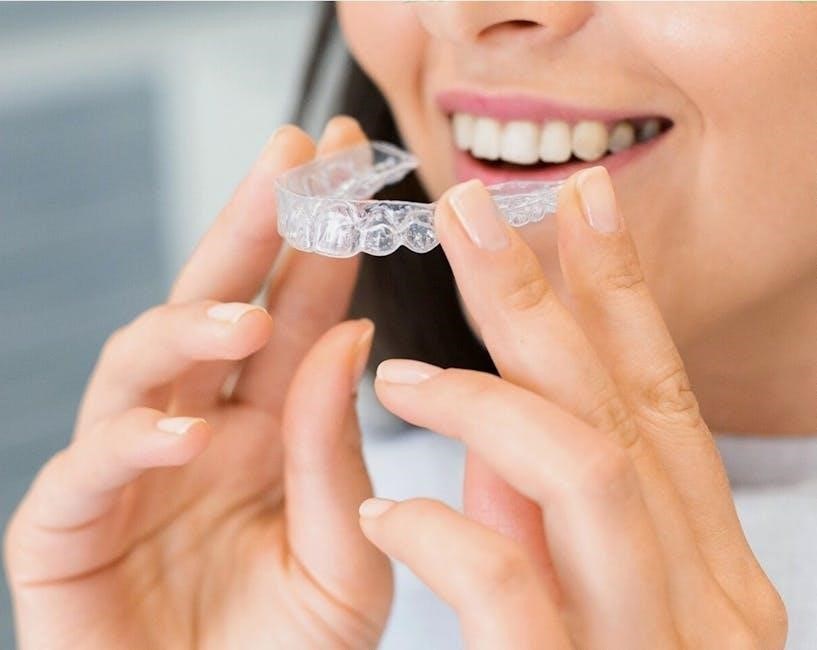
Lumineux strips require careful application for optimal results. Begin by peeling the strip from its backing‚ and then carefully adhere it to your teeth.

Applying the Upper Strip

To begin‚ carefully peel the upper whitening strip from its protective backing. Ensure your teeth are clean and dry for optimal adhesion. Position the strip onto your upper teeth‚ aligning it with the gumline.

Gently press the strip firmly onto each tooth‚ ensuring full contact. Use a small mirror to verify complete coverage‚ especially along the edges. Fold any excess strip material over the back of your upper teeth to secure it. Avoid applying the strip to your gums.

Proper placement is crucial for even whitening and minimizing potential irritation.

Applying the Lower Strip

Now‚ carefully peel the lower whitening strip from its protective backing‚ mirroring the process used for the upper strip. As with the upper strip‚ ensure your lower teeth are clean and completely dry before application. Position the strip onto your lower teeth‚ aligning it with the gumline.

Gently press the strip firmly against each tooth‚ guaranteeing full contact for even whitening. Utilize a mirror to confirm complete coverage‚ paying attention to the edges. Fold any excess strip material over the back of your lower teeth for secure hold.

Ensuring Proper Adhesion

Proper adhesion is crucial for optimal results. After applying both upper and lower strips‚ use your finger or the back of a spoon to gently press each strip firmly against the surface of your teeth. This eliminates air bubbles and ensures the whitening gel makes consistent contact.

Pay close attention to the edges of the strips‚ molding them to the contours of your teeth and gums. A well-adhered strip will stay in place comfortably during the 30-minute treatment‚ maximizing the whitening effect.

Wearing Time & Removal

Lumineux strips should be worn for 30 minutes. Gently peel off the strips and rinse your mouth with water‚ or brush your teeth.

Optimal Wearing Time (30 Minutes)

Lumineux Whitening Strips are formulated to deliver optimal results when worn for a precise duration of 30 minutes. This timeframe allows the active whitening ingredients to effectively penetrate the enamel and lift stains without causing undue sensitivity.

It’s crucial to adhere to this recommended wearing time; exceeding it doesn’t necessarily enhance whitening and may increase the risk of temporary discomfort. Setting a timer is a helpful way to ensure accurate application. Remember‚ consistency is key for achieving a noticeably brighter smile!

Proper Strip Removal Technique

After the 30-minute wearing time‚ carefully peel the Lumineux Whitening Strips from your teeth. Start from one end and gently lift‚ avoiding any forceful pulling that could cause discomfort. It’s normal to experience a slight tingling sensation during removal.

Following removal‚ rinse your mouth thoroughly with water to eliminate any remaining gel residue. Brushing immediately after removal isn’t recommended‚ as it can increase sensitivity. Proper removal ensures a comfortable experience and maximizes the whitening benefits.

Post-Application Care

Following strip use‚ rinse your mouth with water. Enhance results by brushing with Lumineux Whitening Toothpaste and using Lumineux Whitening Mouthwash!

Rinsing After Use

After removing the Lumineux whitening strips‚ it’s important to gently rinse your mouth with cool water. This helps to remove any residual whitening gel and prevents potential irritation.

Rinsing doesn’t need to be extensive; a thorough swish for about 30 seconds is sufficient. Avoid swallowing the water. Temporary white spots may appear‚ but these are normal and should disappear within 24 to 48 hours.

Rinsing is a crucial step in maintaining good oral hygiene post-treatment and preparing your mouth for subsequent care‚ like brushing.

Brushing with Lumineux Whitening Toothpaste

Following the rinse‚ brush your teeth thoroughly with Lumineux Whitening Toothpaste. This toothpaste is specifically formulated to complement the whitening strips‚ enhancing and maintaining your brighter smile.

Brush for two minutes‚ ensuring you reach all surfaces of your teeth. The toothpaste helps to remove any remaining gel residue and strengthens enamel. It also aids in preventing future staining‚ prolonging the results achieved with the strips.

Consistent use of Lumineux toothpaste is key for optimal and lasting whitening effects.

Potential Side Effects & How to Manage Them

Lumineux strips may cause temporary tooth sensitivity or gum irritation; discontinue use if discomfort persists‚ and consult your dentist.

Tooth Sensitivity

Tooth sensitivity is a common‚ temporary side effect experienced by some users of Lumineux Whitening Strips. This occurs because the whitening agent can temporarily dehydrate the teeth‚ exposing the dentin and nerves underneath.

To manage sensitivity‚ consider using a toothpaste specifically designed for sensitive teeth before and after use. Reducing the wearing time to 15-20 minutes can also help. If sensitivity is severe or prolonged‚ discontinue use and consult your dentist.

Remember to maintain good oral hygiene and avoid extremely hot or cold foods and beverages during treatment.

Gum Irritation

Mild gum irritation is another potential side effect when using Lumineux Whitening Strips‚ often caused by the strips contacting the gumline. Ensuring proper strip adhesion‚ avoiding excessive overlap onto the gums‚ is crucial to minimize this.

If irritation occurs‚ discontinue use temporarily and allow your gums to recover. Rinsing your mouth with warm salt water can provide soothing relief. If irritation persists or worsens‚ stop using the product and consult your dental professional.

Proper application technique is key to a comfortable experience.

Maximizing Your Results

Lumineux results are amplified when combined with their Whitening Mouthwash‚ and consistent use of Lumineux Whitening Toothpaste enhances and maintains brightness.

Combining with Lumineux Whitening Mouthwash

Lumineux Whitening Mouthwash is designed to complement the strips‚ working synergistically to boost and prolong whitening effects. Rinsing with the mouthwash after strip removal helps to remove surface stains and further brighten your smile.

The mouthwash contains ingredients that support enamel health while actively whitening‚ creating a comprehensive oral care routine. Consistent use of both the strips and mouthwash maximizes results‚ delivering a noticeably brighter and healthier-looking smile. It’s a powerful duo for achieving optimal whitening!

Frequency of Use

Lumineux Whitening Strips offer flexibility in usage‚ allowing you to tailor the treatment to your individual needs and sensitivity levels. Unlike some brands‚ Lumineux strips can be used as often as desired‚ providing a customizable whitening experience.

For quicker results‚ daily application is recommended‚ while those with sensitive teeth may prefer to alternate days. Consistent use‚ combined with Lumineux toothpaste and mouthwash‚ will maintain a brighter smile. Monitor your teeth for sensitivity and adjust accordingly.

Long-Term Maintenance

Lumineux strips deliver lasting results with regular use‚ minimizing the need for frequent touch-ups and maintaining a noticeably brighter‚ whiter smile.

Periodic touch-up applications can help preserve your desired shade‚ ensuring a consistently radiant appearance over time.

Maintaining Whitened Teeth

Maintaining your newly whitened smile with Lumineux requires consistent oral hygiene practices. Brushing twice daily with Lumineux Whitening Toothpaste is crucial‚ as it helps remove surface stains and prevent future discoloration.

Incorporating Lumineux Whitening Mouthwash into your routine further enhances stain removal and freshens breath. Limiting consumption of staining beverages like coffee‚ tea‚ and red wine will also contribute to longer-lasting results.

Regular dental check-ups and professional cleanings are essential for preserving your bright smile and addressing any potential concerns. A proactive approach ensures your Lumineux results endure.

Touch-Up Applications

Lumineux Whitening Strips allow for flexible touch-up applications to maintain your desired brightness. As needed‚ you can re-initiate a full treatment course or utilize strips more frequently for minor adjustments.

For subtle enhancements‚ consider using the strips every few weeks‚ adjusting the frequency based on your lifestyle and consumption of staining foods and drinks. Remember‚ consistency is key to preserving your radiant smile.

Lumineux’s formula is designed for repeated use‚ offering a convenient way to combat everyday discoloration and keep your teeth looking their best.

Frequently Asked Questions (FAQ)

Lumineux Strips are generally safe for enamel‚ but avoid if you have gum disease or open sores. Braces users should consult their orthodontist first.

Are Lumineux Strips Safe for Enamel?

Lumineux Whitening Strips are formulated with enamel safety in mind‚ utilizing a gentle yet effective whitening process. However‚ individual responses can vary‚ and it’s crucial to consider your overall dental health.

If you have pre-existing enamel erosion‚ sensitivity‚ or conditions like gum disease or open sores in your mouth‚ it’s best to consult with your dentist before using the strips; While generally considered safe for healthy enamel‚ excessive or prolonged use of any whitening product could potentially cause temporary sensitivity.

Following the recommended usage guidelines – specifically the 30-minute application time – is key to minimizing any potential risks and maximizing the benefits of Lumineux Strips.

Can I Use Lumineux Strips with Braces?

Generally‚ it is not recommended to use Lumineux Whitening Strips while actively undergoing orthodontic treatment with braces. The strips are designed to adhere to the surface of your teeth‚ and braces obstruct this contact‚ leading to uneven whitening.

Areas covered by brackets won’t receive the same whitening effect‚ resulting in noticeable discrepancies once your braces are removed. It’s best to complete your orthodontic treatment first and then whiten your teeth for a uniform result.

Consulting your orthodontist is crucial for personalized advice regarding whitening options during or after braces treatment.

Comparing Lumineux to Other Whitening Options

Lumineux strips provide a cost-effective alternative to professional whitening‚ and are often more convenient than other over-the-counter options available for home use.

Lumineux vs. Professional Whitening

Lumineux Whitening Strips offer a compelling alternative to the higher cost and time commitment of professional teeth whitening treatments performed by a dentist. While professional whitening typically delivers faster and potentially more dramatic results‚ it can be significantly more expensive.

Lumineux provides a gradual whitening effect with consistent use‚ offering a more affordable and convenient solution for maintaining a brighter smile at home. Professional treatments often involve stronger peroxide concentrations and require in-office visits‚ whereas Lumineux allows for flexibility and control over the whitening process.

Lumineux vs. Other Over-the-Counter Strips

Compared to many other over-the-counter teeth whitening strips‚ Lumineux distinguishes itself through its commitment to enamel safety and a focus on overall oral health. Many competing brands rely heavily on high concentrations of hydrogen peroxide‚ potentially causing increased sensitivity.

Lumineux often incorporates additional ingredients designed to support gum health and minimize discomfort during the whitening process. This holistic approach‚ combined with the ease of use‚ positions Lumineux as a preferred choice for those seeking effective whitening with a gentler formula.

Precautions & Warnings

Lumineux strips should be avoided by individuals with gum disease‚ cavities‚ or sensitive teeth; discontinue use if irritation occurs.

Store in a cool‚ dry place‚ out of reach of children‚ to maintain product efficacy and safety.

Who Should Avoid Using Lumineux Strips?

Lumineux Whitening Strips aren’t suitable for everyone. Individuals with existing dental problems should exercise caution. Those with cavities or gum disease should not use the strips‚ as the ingredients can exacerbate these conditions and cause further discomfort.

Pregnant or breastfeeding women should consult their dentist before use. Additionally‚ individuals under the age of 13 should avoid these strips. If you have severely sensitive teeth‚ begin with limited use and monitor for increased sensitivity‚ discontinuing if necessary. Always prioritize dental health!

Storage Instructions

To maintain the efficacy of your Lumineux Whitening Strips‚ proper storage is crucial. Keep the individual strip packets sealed tightly after each use to prevent them from drying out and losing their adhesive properties.

Store the entire box in a cool‚ dry place‚ away from direct sunlight and moisture. Avoid storing in the bathroom‚ where humidity levels can compromise the strips; Proper storage ensures optimal performance and helps you achieve the brightest possible smile!

Customer Reviews & Testimonials

Real user experiences showcase significant smile improvements with Lumineux Strips‚ often highlighted by noticeable whitening and increased confidence in their appearance.

Many users share compelling before-and-after photos‚ demonstrating the strips’ effectiveness and ease of integration into daily routines.

Real User Experiences

Numerous customers report achieving visibly whiter teeth after consistent use of Lumineux Whitening Strips‚ often within just a few applications. Many appreciate the simplicity of the process‚ noting the strips adhere well and are comfortable to wear during the 30-minute treatment time.

Several reviewers mention experiencing minimal sensitivity‚ a common concern with teeth whitening products‚ and attribute this to the formula’s unique approach. Users also frequently praise the affordability and convenience compared to professional dental treatments‚ making a brighter smile accessible at home.

Before & After Photos

Visual evidence from user-submitted before & after photos consistently demonstrates the effectiveness of Lumineux Whitening Strips. Images showcase a noticeable reduction in surface stains‚ revealing brighter‚ more confident smiles after a complete treatment course.

These photos highlight improvements in various shades‚ from subtle brightening to dramatic transformations‚ depending on individual teeth and use frequency. Many users share their journeys online‚ providing compelling visual proof of the strips’ ability to deliver professional-looking results at home.

Where to Purchase Lumineux Strips

Lumineux Whitening Strips are readily available for purchase directly from the official Lumineux website‚ and also at various retail locations nationwide.

Official Website

Lumineux’s official website is the most direct source to acquire their Whitening Strips‚ offering the complete product range and often exclusive deals.

Navigating the site is straightforward‚ allowing you to easily browse available options‚ read detailed product descriptions‚ and view customer reviews.

Purchasing directly ensures authenticity and provides access to potential subscription services for regular deliveries. The website frequently features promotions and bundles‚ offering cost savings for those committed to consistent whitening. Secure checkout and reliable shipping are standard‚ making it a convenient and trustworthy option.

Retail Availability

Beyond the official website‚ Lumineux Whitening Strips are increasingly available at major retail locations‚ expanding accessibility for consumers.

You can typically find them at stores like Target‚ Walmart‚ and Ulta Beauty‚ often within the oral care or beauty sections.

Availability may vary depending on location‚ so checking store inventories online before visiting is recommended. Retailers occasionally offer promotions or discounts‚ providing alternative cost-saving opportunities. Purchasing in-store allows for immediate access and avoids shipping costs‚ offering a convenient option for those needing a quick solution.